
1. Confirm abnormal flow
A meter observation and fixture checks help establish whether unexplained water is moving. The EPA WaterSense guide describes the household meter check.
Canton, Georgia
Water beneath a concrete floor can be difficult to trace from the surface. If a floor is unexpectedly warm or damp, or the meter shows use while fixtures are off, ask for a provider who handles slab leak diagnostics.
Signs to note
A hot spot on flooring, damp carpet, unexplained water sounds, lower pressure or a bill that rises without a change in use may warrant inspection. These symptoms can have other causes, so the goal is to identify the pipe and likely location before opening the floor.
For the broader picture, see our guide to water leak detection in Canton.
The visit
A provider may isolate lines, check pressure and use suitable locating methods. The exact test depends on the piping and layout. Ask for a clear explanation of the suspected source, any remaining uncertainty, and repair options before authorizing floor opening or pipe work. In River Green or Towne Mill, give the exact street address to confirm availability.
Compare the clues
A slab leak is a pipe leak under or within the concrete foundation. A warm floor, damp flooring, a water sound, lower pressure or an unexpectedly high bill can point in that direction. None of those signs identifies the break by itself. A leaking toilet, nearby supply connection, shower drain or exterior water entry can produce a similar clue.
Record when the area changes. A hot spot linked to hot-water use suggests a different test from moisture that appears only after rain. Use a no-use meter check to see whether water is flowing with fixtures off, then tell the provider what you found. A moving meter is evidence of flow, not proof that the pipe beneath the floor is leaking.
The diagnostic sequence
A meter observation and fixture checks help establish whether unexplained water is moving. The EPA WaterSense guide describes the household meter check.
The provider may distinguish hot from cold supply lines, check pressure, and isolate accessible branches. Ask what each test rules in or out.
Listening, moisture readings, and temperature patterns may narrow a likely area. The provider should explain the evidence and any uncertainty before concrete or flooring is opened.
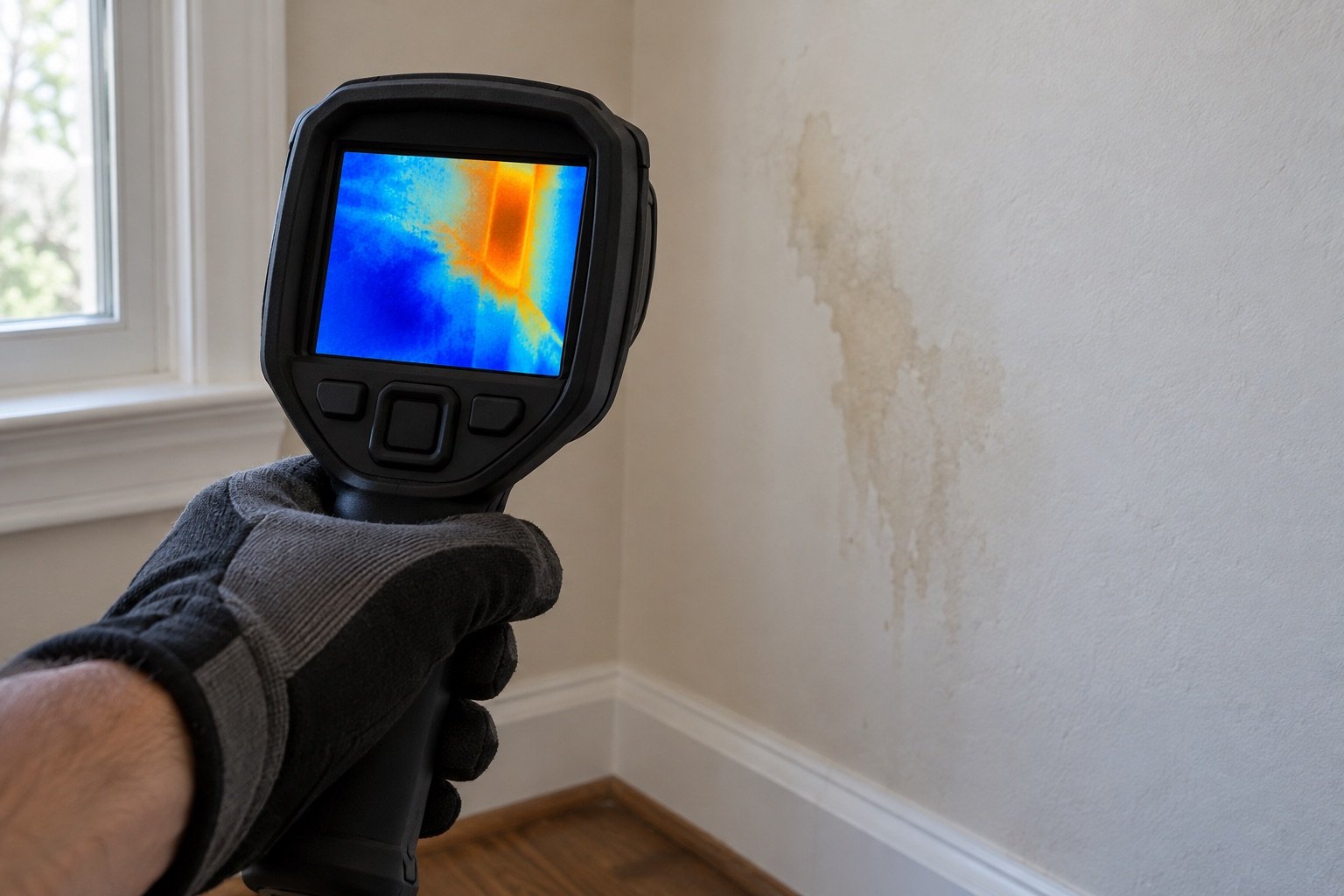
Pipe layout, floor finish, background noise and access affect which method is useful. A thermal image shows surface temperature, not a photo of the pipe. Ask for the likely source, the proposed access point, and whether further confirmation is needed.
Repair planning
Detection and repair can be separate decisions. Ask the independent provider to explain the scope and price before approving work. If your water bill rose, keep the bill and repair records. City of Canton and CCWSA publish different adjustment rules for qualifying customer-side leaks.
Slab leak questions
Testing can often narrow the likely area before opening. A provider may still need access to confirm and repair the damaged pipe. Ask which finding justifies the proposed opening.
No. Heating, sunlight and ordinary hot-water use can warm flooring. The provider should compare that clue with meter behavior, pipe layout and other tests.
Not always. Confirm whether the independent provider offers detection, repair and surface restoration, and whether each is included in the quoted scope.
For a focused first check, read what a warm floor can mean.
Ready to talk?
Share your address, symptoms and whether the water is still running. We can check whether an independent provider is available for the job.